

Pediatric Chiropractic Care in Macomb, MI
Every parent wants to give their child a healthy start. At Bence Chiropractic Wellness Center in Macomb, Dr. Pavel Bence, DC, CCWP provides gentle chiropractic care for infants, children, and teenagers, with techniques adapted to each child’s age, size, development, and individual needs.
Children are not simply smaller adults. Their bodies are growing and changing quickly. Babies are learning entirely new patterns of movement. School-aged children are running, climbing, falling, carrying backpacks, and developing posture habits. Teenagers add rapid growth, sports, prolonged sitting, phones, computers, and other physical demands.
With more than 40 years of chiropractic experience, Dr. Bence has cared for generations of families and believes healthy habits should begin early. His goal is to address the problem that brings a child into the office while encouraging healthy movement and good spinal function during the years when the body is developing.
“Kids are growing, learning, falling, playing sports, carrying backpacks, and spending more time than ever looking down at screens. I want to make sure their bodies are moving and functioning as well as possible while all of that growth is taking place.” Dr. Pavel Bence, DC, CCWP
Frequently Asked Questions About Pediatric Chiropractic Care
What Is Pediatric Chiropractic Care?
Pediatric chiropractic care is chiropractic evaluation and treatment designed specifically for babies, children, and teenagers. The examination looks at age-appropriate factors such as posture, spinal and joint movement, muscle tension, balance, activity, injuries, and development to understand how the child’s body is functioning.
Treatment is based on what the examination reveals. The techniques used for a baby are very different from those appropriate for a teenager, with the amount of pressure and type of adjustment selected for the individual child.
Is Chiropractic Care Safe for Infants and Children?
Yes. Dr. Bence uses gentle, age-appropriate techniques and evaluates each child before determining what type of care is appropriate. Infants and young children are not adjusted with the same amount of force used with adults. Treatment involves very light contact and small, controlled movements.
A child’s health history, development, previous injuries, and reason for the visit are also considered. If the examination identifies something that requires another type of evaluation or care, Dr. Bence discusses that with the parents and recommends the appropriate next step.
How Is a Child’s Chiropractic Adjustment Different from an Adult Adjustment?
The primary difference is the amount of force and the technique used. Babies and young children require much lighter pressure and smaller movements than adults. As children grow, the techniques used reflect their size, development, examination findings, activity level, and comfort.
The objective remains the same: restore healthy movement and function where a chiropractic problem is identified while using an approach appropriate for that child.
Why Do Parents Bring Their Children to a Chiropractor?
Parents bring their children to Bence Chiropractic for posture problems, neck or back discomfort, restricted movement, sports injuries, muscle tension, headaches associated with the neck, and discomfort following falls or everyday activity. Parents of infants also come in with concerns about neck movement or a baby who consistently prefers turning the head in one direction.
Chiropractic care also helps children with colic, bedwetting, injuries sustained as passengers in auto accidents, and ADD/ADHD.
Whatever the concern, the first step is understanding what the child is experiencing and determining whether a chiropractic problem is contributing to it.
How Young Can a Child Receive Chiropractic Care?
Dr. Bence sees children beginning in infancy. For babies, the evaluation includes their movement and development along with relevant information about pregnancy and delivery.
When a chiropractic problem is identified, treatment uses extremely gentle techniques appropriate for an infant’s developing body. As the child grows, both the examination and treatment reflect the physical changes taking place.
What Happens During My Child’s First Chiropractic Visit?
Your child’s first visit begins with a conversation about your concerns, health and developmental history, previous injuries, and what you hope to accomplish with care. For infants and younger children, pregnancy and birth history also provide useful information.
The examination is adapted to the child and includes the areas relevant to the reason for the visit. Depending on age and need, Dr. Bence also uses INSiGHT™ scanning technology and a posture evaluation. The scans are quick and noninvasive. Afterward, he explains what he found and what he recommends.
Can Chiropractic Care Help Children with Poor Posture or Tech Neck?
Yes. Long periods looking down at phones, tablets, computers, and gaming systems place repeated stress on the neck and upper back. Forward-head posture, tight neck and shoulder muscles, stiffness, headaches associated with the neck, and restricted movement often develop alongside those habits.
When spinal misalignments are present, chiropractic adjustments address the affected joints. Better screen positioning, movement breaks, stretching, and strengthening address the habits and physical stresses contributing to the problem.
Can Pediatric Chiropractic Care Help with Sports Injuries?
Yes. Sports, training, falls, impacts, and repetitive activity place significant demands on a growing body. Young athletes develop muscle strains, restricted joints, neck or back discomfort, stiffness, and other musculoskeletal problems.
Dr. Bence evaluates what has been affected and how the injury has changed the child’s movement and function. Chiropractic adjustments, stretching, strengthening, and mobility work are then used according to the injury and examination findings. When an injury requires additional evaluation, he recommends the appropriate next step.
Why Dr. Bence Believes Chiropractic Care Should Begin Early
Childhood is a period of constant physical change. Babies learn to hold up their heads, roll, sit, crawl, stand, and walk. Young children run, jump, fall, climb, and discover what their bodies can do. Later come school desks, backpacks, sports, phones, tablets, and rapid growth. Dr. Bence believes the best time to begin chiropractic care is shortly after birth to address the physical stresses placed on an infant during the birth process. In fact, each of Dr. Bence’s own children was adjusted shortly after birth.
Dr. Bence believes it makes sense to pay attention to spinal health and movement while those patterns are developing rather than waiting until years of poor posture, physical stress, or unhealthy movement becomes more difficult to correct.
That philosophy extends beyond chiropractic treatment. Parents teach their children to brush their teeth, eat well, exercise, and care for themselves because those habits stay with them throughout life. Dr. Bence believes taking care of the spine and joints deserves a place in that conversation too.
“One of the best things we can give a child is an understanding that taking care of their body matters. I’d rather help establish those habits early than wait until years of poor movement and posture have become much harder to correct.” Dr. Pavel Bence, DC, CCWP
Pregnancy, Birth, and Your Baby’s First Chiropractic Evaluation
For infants and very young children, understanding the pregnancy and birth provides useful context when evaluating the baby’s neck, spine, and movement.
Birth is a significant physical event for both mother and baby. During delivery, the baby’s head, neck, and body move through a series of positions and physical forces. Interventions such as forceps or vacuum assistance introduce additional stress. A gentle examination shows how the baby’s neck and spine are moving and whether tension, restriction, or another musculoskeletal concern is present.
Parents provide important clues as well. A baby may consistently prefer turning the head in one direction, seem uncomfortable in certain positions, or have difficulty moving the neck freely. Combining those observations with the examination gives Dr. Bence a clearer understanding of what is happening.
What Do Pediatric Chiropractic Adjustments Feel Like?
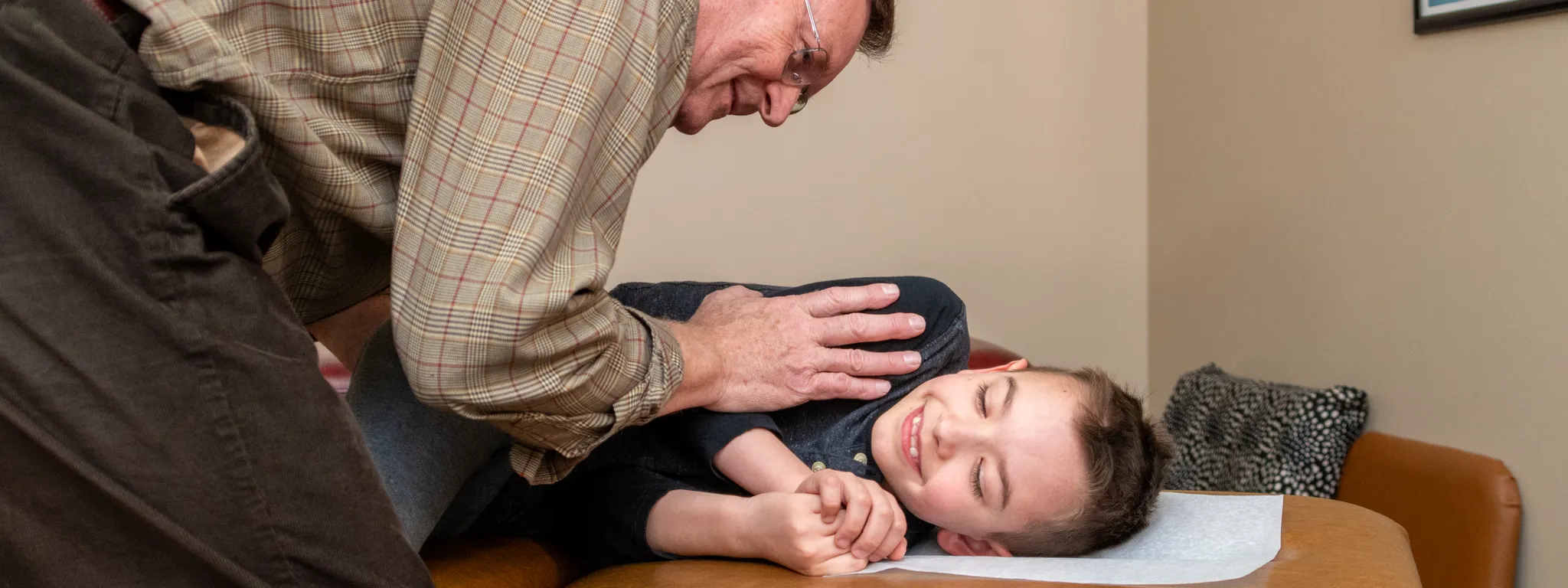
Parents are often surprised by how little pressure is necessary when adjusting an infant. There is no need for the kind of force someone might imagine when thinking about an adult chiropractic adjustment. Gentle fingertip contact is often all that is necessary. Gentle fingertip contact is often all that’s necessary, but it requires the expertise of an experienced chiropractor like Dr. Bence to make the adjustment precise and accurate.
Dr. Bence offers parents a simple comparison: think about the amount of pressure you use with your fingertips to determine whether an avocado is ripe. That gives parents an easy way to understand just how light the pressure used with an infant is.
For an older child or teenager, the adjustment reflects a larger, more developed body. In every case, the technique is selected to comfortably and effectively address what was found during the examination.
How Does Dr. Bence Evaluate Children?
A pediatric chiropractic examination is built around the child in front of him. With infants and toddlers, parents provide much of the information about development, movement patterns, and the concern that prompted the visit. School-aged children participate more directly, while teenagers are often able to describe what they feel, when symptoms occur, and how sports or other activities affect them.
The physical examination focuses on the areas relevant to those concerns. It includes appropriate evaluation of spinal alignment, range of motion, joint mobility, muscle tension and balance, neurological function, and movement patterns. A young athlete with an injury receives a different examination emphasis from an infant whose parents are concerned about neck movement.
INSiGHT™ scanning technology is also used when appropriate. Depending on the child’s age and needs, one or two quick, noninvasive scans are performed without radiation, along with a posture evaluation. The information gathered through the history, physical examination, scans, and posture assessment gives Dr. Bence a fuller picture of the child’s chiropractic needs. Children also tend to respond to chiropractic care more quickly than adults.
Pediatric Chiropractic for Posture and Tech Neck
Phones, tablets, gaming systems, laptops, and schoolwork keep many children looking downward or sitting in one position for long periods. Over time, the head begins to sit farther forward, the shoulders round, and the muscles supporting the neck and upper back have to work harder.
Correcting a restricted or misaligned spinal joint addresses only part of that picture if the child returns to the same physical stresses every day. Screen height, prolonged sitting, movement breaks, stretching, strengthening, and posture all matter.
This is where parents have an important role. Raising a screen, changing how homework is done, encouraging regular movement, and helping a child become aware of posture reinforce the work being done in the office and reduce the repeated stresses affecting the neck and upper back.
Chiropractic Care for Young Athletes
Kids are supposed to move, and Dr. Bence wants them to be able to stay active. When a young athlete is injured, however, simply waiting until the soreness becomes tolerable does not necessarily mean the affected area is moving and functioning normally again.
The examination looks at the structures involved in the injury and how it has affected movement. Treatment then addresses the joint restrictions, muscle tightness, loss of mobility, or other chiropractic problems Dr. Bence finds. Stretching, strengthening, and other recommendations support the work being done in the office.
The objective is to restore proper function so the child is better prepared for the running, jumping, throwing, skating, gymnastics, or other physical demands of returning to activity.
Torticollis and a Baby Who Prefers Turning One Way
Some parents notice that their baby repeatedly turns the head toward one side or seems reluctant to rotate it in the opposite direction. This pattern can involve muscle tightness, restricted neck movement, positional preference, or torticollis.
A gentle examination of cervical movement and the surrounding muscles helps identify whether a musculoskeletal restriction is present. When it is, gentle chiropractic adjustments address cervical joint movement while appropriate stretching and positioning help the surrounding muscles.
A persistent head-turning preference deserves attention because there are different reasons a baby may favor one direction. Understanding why allows treatment and recommendations to be based on what that particular baby needs.
Pediatric Chiropractic and the Nervous System
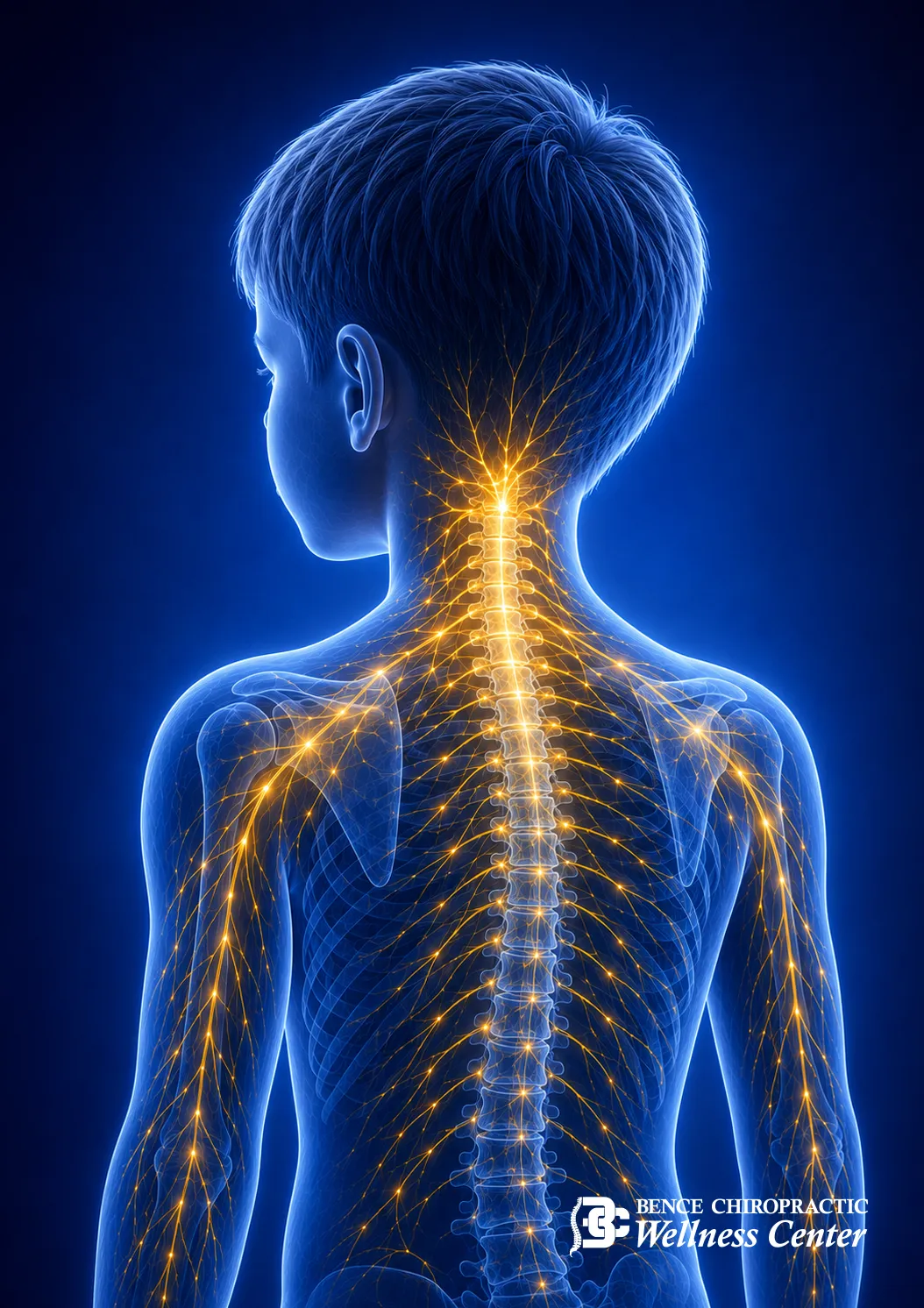
The relationship between the spine and nervous system is central to Dr. Bence’s chiropractic philosophy. The nervous system includes the brain, spinal cord, and nerves that carry communication throughout the body. The spine protects the spinal cord and provides openings through which spinal nerves travel.
Chiropractors use the term subluxation to describe areas where spinal joints have become misaligned or are no longer moving and functioning properly. When a subluxation is identified, chiropractic care is directed toward restoring better movement and alignment and reducing the unnecessary mechanical stress created by a joint that is not functioning properly.
This principle applies throughout life. What changes in pediatric care is how the child is evaluated and how the chiropractic adjustment is performed.
What About Colic, Feeding Problems, Sleep, and Other Infant Concerns?
Parents naturally have questions about concerns that are common during infancy. A baby who cries constantly, struggles with feeding, sleeps poorly, or simply seems uncomfortable can leave parents searching for an explanation, and those observations are important to discuss during the visit.
Over the years, parents have brought babies to Dr. Bence with concerns such as feeding difficulties and colic, and some have reported positive changes after chiropractic care. He listens to those experiences and evaluates the baby’s neck, spine, movement, and muscle tension to determine whether a chiropractic problem is present.
These symptoms also have causes unrelated to the spine. Persistent feeding problems, unusual or excessive crying, seizures, significant digestive concerns, or other unexplained symptoms need appropriate pediatric evaluation. Chiropractic care addresses the spinal and musculoskeletal problems Dr. Bence identifies without assuming that every childhood symptom originates there.
Helping Children Become Comfortable with Chiropractic Care
Any healthcare office can feel intimidating to a child, so the environment and the way care is introduced matter. Bence Chiropractic Wellness Center has a kids’ area where children can play while their parents talk with Dr. Bence. Parents get an opportunity to explain what they have been noticing without expecting a young child to sit quietly through an adult conversation.
When it is time for the examination or adjustment, the child is included in the process at an age-appropriate level. Older children can ask questions. Younger children have time to become familiar with what is happening. Parents remain involved throughout the visit.
Creating a gentle, positive experience helps children become comfortable with chiropractic care and with the broader idea that taking care of their bodies is a normal part of staying healthy.
Chiropractic Care Through Every Stage of Childhood
The physical demands placed on a child change dramatically between infancy and the teenage years. So do the problems that bring families to Bence Chiropractic Wellness Center. A baby with restricted neck movement, a school-aged child developing postural problems, and a teenager recovering from a sports injury each arrives with a very different need.
That is why pediatric chiropractic at Bence Chiropractic Wellness Center is individualized rather than built around a standard childhood treatment program. The examination determines what needs attention, and treatment is selected accordingly.
“A six-week-old baby, a seven-year-old, and a sixteen-year-old athlete obviously don’t need the same chiropractic care. The technique, the examination, and what we’re trying to accomplish all have to fit that particular child.” Dr. Pavel Bence, DC, CCWP
Pediatric Chiropractic Care in Macomb, MI
If you have questions about chiropractic care for your infant, child, or teenager, Dr. Bence will take the time to listen to your concerns, evaluate your child, and explain what he finds. Pediatric care at Bence Chiropractic Wellness Center is gentle, individualized, and designed around your child’s needs.
Bence Chiropractic Wellness Center provides pediatric chiropractic care in Macomb, MI, serving families from Sterling Heights, Shelby Township, Clinton Township, Utica, and surrounding communities. Walk-in appointments are always welcome.
Call (586) 978-9900 to schedule a pediatric chiropractic evaluation with Dr. Bence.
Related Conditions
Chiropractic Care
The evaluation and adjustment approach behind every care plan at Bence Chiropractic, explained in more detail.
Learn morePrenatal Chiropractic
Gentle, family-centered care starts before birth, see our approach to pregnancy chiropractic care.
Learn moreHeadaches
Neck-related headaches can affect kids too, especially with today’s screen habits.
Learn moreWhat Our Patients Are Saying
Nothing is more rewarding than knowing we’ve helped our patients live healthier, happier lives. We invite you to read what individuals and families throughout Macomb and the surrounding communities have shared about their experience at Bence Chiropractic Wellness Center.